A Guide to Restaurant Community Ownership
- Claire Beer

- 4 jul
- 6 minuten om te lezen
A burger spot used to win on location, speed, and price. That still matters. But the next wave of restaurant brands is competing on something bigger - who gets to belong, who gets rewarded, and who feels like they are part of the rise. That is where a guide to restaurant community ownership becomes useful, especially for brands and supporters who see food, culture, and digital participation as one connected system.
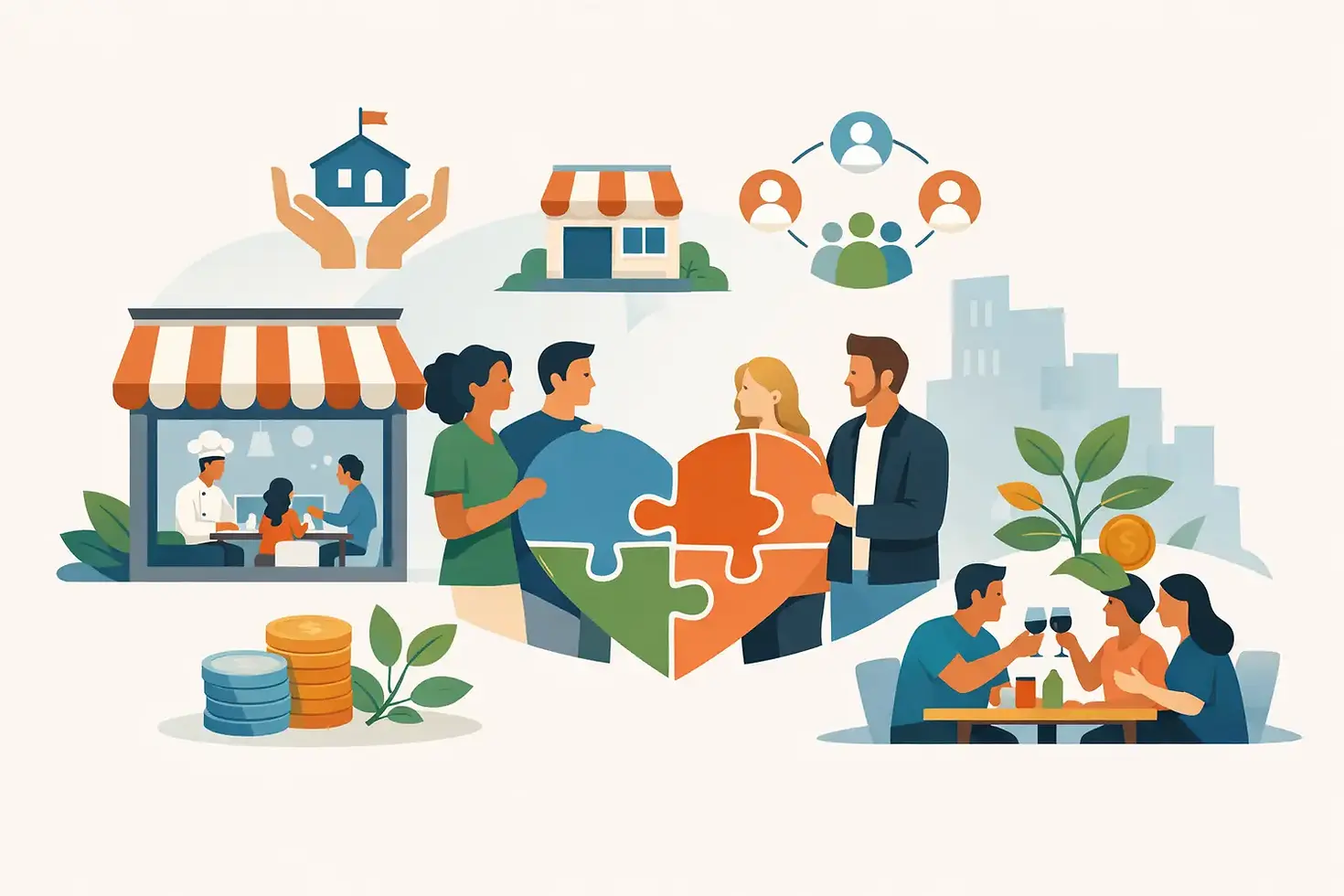
Community ownership in restaurants is not just a rebrand of loyalty. It is a shift from transaction to participation. Instead of asking people to buy once and come back later, the model gives them a reason to care about the brand's momentum. Sometimes that shows up through discounts, exclusive perks, token-based rewards, early access, or a stronger say in how the brand story spreads. The core idea is simple - the customer is no longer only a customer. They become part of the engine.
What restaurant community ownership really means
Traditional restaurants operate in a one-way flow. The brand sells food, the customer pays, and the relationship resets after the meal unless a loyalty program pulls them back. Community ownership changes that dynamic. It builds an ecosystem where supporters have more skin in the game, whether through digital memberships, branded tokens, governance-style participation, special access, or status tied to long-term engagement.
That does not always mean legal equity. In fact, most community ownership models in hospitality do not hand out actual ownership stakes in the formal corporate sense. The phrase often points to emotional ownership, utility-based participation, and economic alignment through perks or digital assets. That distinction matters. If a brand promises too much or blurs the line between fandom and finance, trust breaks fast.
The stronger version of this model gives people three things at once. It gives them a reason to buy, a reason to stay, and a reason to recruit others. That is why the concept is gaining traction among digitally native brands. It compresses marketing, loyalty, and community building into one system.
Why this guide to restaurant community ownership matters now
Restaurant margins are tight, customer attention is fractured, and generic rewards programs are getting stale. A free side after ten purchases is fine, but it rarely creates identity. Community ownership creates identity. It tells people that showing up early matters and that participation can compound.
That hits especially hard with audiences who already understand Web3 culture, online status, token communities, and meme-fueled brand momentum. They do not just want a coupon. They want access, upside, and a role in the story. A restaurant brand that gets this right is not only selling meals. It is selling belonging with utility attached.
There is also a bigger brand play here. Community ownership can turn expansion into a public narrative. New locations, product drops, collaborations, and holder perks become moments the community wants to amplify. Instead of paying endlessly for awareness, the brand creates believers who push the message because they benefit when the brand gets louder.
The building blocks of a community-owned restaurant model
The smartest models start with the physical experience. If the food, service, and brand energy are weak, no token layer will save it. Community ownership works best when it sits on top of a concept people already want in the real world.
From there, the structure usually adds a membership or participation layer. That could be a token, an app-based rewards system, a digital pass, or a tiered access model. The exact format matters less than the behavior it creates. People need a clear reason to join and a clear reason to keep holding, showing up, or spreading the word.
Perks have to feel real. Discounts are useful, but access tends to be stickier. Early product drops, special menu items, event invitations, insider channels, location launch benefits, and status-based rewards all create stronger attachment than a basic points balance. If the system only offers financial language without everyday utility, it starts to feel hollow.
Narrative matters too. Community ownership only scales when people can explain it in one sentence. If the pitch is confusing, participation drops. If the pitch is sharp, the model becomes contagious. A brand like PAINDEMIE GLOBAL naturally fits this format because it sits at the intersection of fast food, token culture, and expansion-focused community energy.
Where Web3 fits in
Web3 gives restaurant community ownership a stronger operating system. Tokens, wallets, onchain rewards, and digital identity tools make it easier to recognize participation and automate perks across borders. That is especially attractive for restaurant brands with global ambitions and audiences that already live online.
But this is where discipline matters. Web3 is the tool, not the meal. If the token becomes the whole story, the restaurant risks feeling like a side quest. The strongest approach keeps food at the center and uses digital mechanics to deepen retention, reward belief, and turn customers into active community members.
There is also a difference between hype and utility. Hype gets attention fast. Utility keeps people around after the first wave. A token that unlocks discounts, special access, brand campaigns, and recognition inside the ecosystem has a stronger foundation than a token that only promises future upside. Supporters want to feel momentum, but they also want to use what they hold.
The trade-offs brands need to face
Community ownership sounds powerful because it is. It is also demanding. Once you invite people into the brand story, they expect consistency, transparency, and movement. A silent brand loses trust faster when the audience feels invested.
There is also a compliance and expectation issue. Brands need to be careful with how they frame benefits, participation, and any investment-style language. If supporters think they are buying one thing and the reality is another, backlash can hit hard. Clear language beats inflated promises every time.
Operationally, the model adds pressure. Perks need fulfillment. Community channels need moderation. Expansion stories need proof. If a brand says holders get insider benefits, those benefits need to show up in ways that feel visible and worth it. This is not a set-it-and-forget-it system. It is an active relationship machine.
Then there is the audience split. Some restaurant customers want a quick meal and nothing more. Others want deeper involvement. A good model serves both without forcing either side into the wrong experience. The casual buyer should still have a great visit. The committed supporter should feel that going deeper actually matters.
How to build a model people actually join
Start with one hard question: why would someone care beyond the food? The answer cannot be vague. Maybe it is because they get stronger discounts, insider access, community status, launch benefits, or a way to participate in the growth arc of the brand. Whatever the answer is, it needs to feel immediate.
Next, make the path simple. If joining requires too many steps, the drop-off will be brutal. People should understand how to participate, what they get, and why staying engaged helps them. Complexity kills momentum, especially in consumer-facing brands.
Then build the reward loop. A smart community ownership system rewards three behaviors - buying, holding, and sharing. Buying keeps the restaurant alive. Holding keeps the community stable. Sharing drives acquisition. When those three actions reinforce each other, the model starts to compound.
Finally, tie participation to milestones people can see. New locations, menu launches, member-only campaigns, live events, and visible community wins all make the system feel alive. Ownership is not only about what people get. It is about what they get to be part of.
What success looks like
A strong restaurant community ownership model creates more than sales spikes. It creates repeat traffic, louder word of mouth, better launch energy, and a customer base that behaves more like a movement than a mailing list. That is the real prize.
The best versions blur the old lines between diner, fan, ambassador, and early supporter. They turn community from an audience into infrastructure. And in a market where attention is expensive and loyalty is fragile, that is a serious advantage.
If you are building or backing a brand in this space, think bigger than rewards and smaller than fantasy. Start with a real restaurant experience. Layer in utility people can use. Give supporters a reason to feel early, seen, and connected to growth. When that clicks, community ownership stops being a trend and starts becoming the moat.



Opmerkingen