Food Brand Tokenomics Explained Clearly
- Claire Beer

- 28 jun
- 5 minuten om te lezen
A burger sells once. A brand with a token can keep the relationship alive long after the tray is cleared.
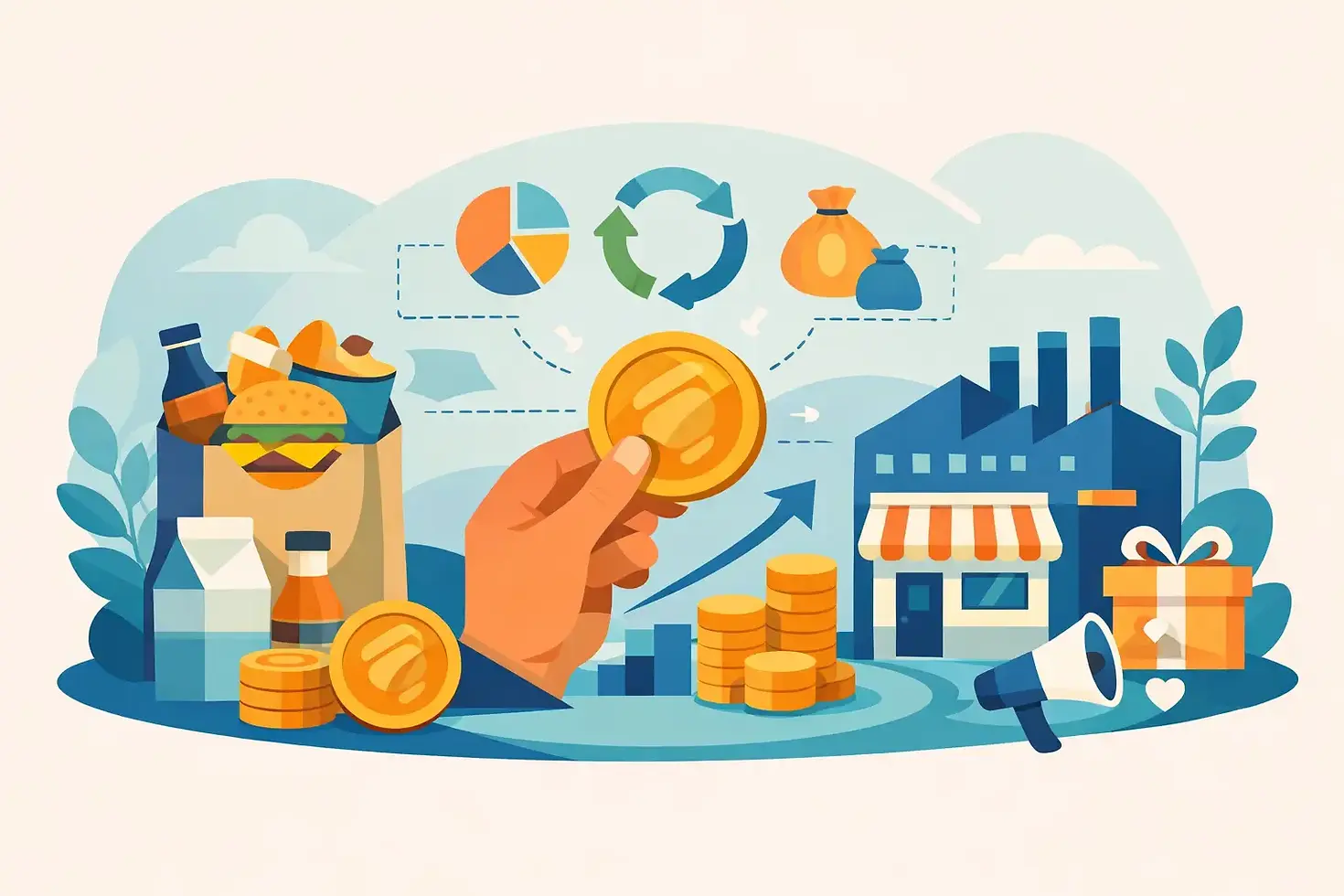
That is the real starting point for food brand tokenomics explained. It is not just about putting a coin next to a menu and hoping hype does the work. It is about turning a food business into a living ecosystem where customers, holders, fans, and growth-minded supporters all have a reason to stay close to the brand.
For a crypto-native audience, this matters because restaurants are usually dead-end transactions. You buy, you eat, you leave. Maybe you get loyalty points if the app is decent. Tokenomics changes that equation. It gives a food brand a way to connect spending, identity, access, rewards, and expansion into one system that can move with real momentum.
What food brand tokenomics explained actually means
At its simplest, tokenomics is the economic design behind a token. It covers supply, utility, distribution, incentives, and the behavior the token is meant to drive. When you bring that into a food brand, the token stops being a random add-on and starts acting like a participation layer around the business.
That participation layer can do a few things at once. It can reward people for engaging with the brand, create perks that feel more dynamic than standard loyalty points, and give the community a stronger stake in the story as the brand expands. Instead of a passive customer base, you get an active circle of people who want the brand to win.
That is why food brand tokenomics explained is really a conversation about alignment. The restaurant wants recurring attention, stronger retention, and a bigger cultural footprint. The customer wants discounts, status, and upside. The holder wants utility that does not feel fake. The token sits in the middle and coordinates those incentives.
Why a restaurant token can hit differently than a loyalty app
Traditional loyalty systems are usually closed loops. You collect points, redeem them, and the value ends inside the app. They are functional, but they are rarely exciting. A token-based model feels different because it can travel beyond the point of sale. It can live in wallets, communities, campaigns, and brand growth narratives.
That creates a bigger emotional engine. People are not just buying food. They are joining early, getting access, and positioning themselves around a brand they believe can scale. For a digitally native audience, that shift matters. Web3 users are already trained to think in terms of ecosystems, not one-off purchases.
Still, this only works when the token has a genuine role. If the token exists with no clear use beyond speculation, people catch on fast. Hype can create a spike, but utility is what gives the brand staying power.
The core pieces of food brand tokenomics
A serious food token model usually rests on four parts: utility, incentives, supply design, and growth narrative.
Utility is the first test. Can the token actually be used for something people care about? In a food brand, that often means discounts, exclusive menu access, community campaigns, limited drops, event access, or special holder benefits. The closer the utility is to real customer behavior, the stronger the model becomes.
Incentives shape what people do next. A brand may want customers to hold instead of flip, visit more often, refer friends, or stay active during expansion phases. Good tokenomics rewards those actions without turning the whole system into a gimmick. The incentives should feel earned, not artificial.
Supply design is where many projects either gain credibility or lose it. If supply is huge with no logic, or if distribution feels tilted toward insiders, trust gets weaker. If release schedules, reward systems, and token allocation are thought through, the brand looks more disciplined. In food, where most people are not reading a 40-page token deck, simplicity matters even more.
Then there is the growth narrative. This is where food brands have an edge. A restaurant can point to real-world expansion, customer demand, physical locations, and actual product movement. That gives the token story more traction than a project built on pure theory. When the brand grows in the real world, the ecosystem has something visible to rally around.
Food brand tokenomics explained through real utility
The strongest version of this model ties token value to clear brand experiences. Think about what makes people care enough to keep showing up. Price advantages matter. So does access. So does status.
A token can function like an upgraded membership layer. Holders might get better discounts than regular app users, early access to launches, community-only campaigns, or participation in promotions tied to store openings and brand milestones. That gives people a reason to keep the token beyond price action.
This is where a brand like PAINDEMIE GLOBAL fits the model naturally. The fast-food side creates immediate utility because people can actually use perks in a consumer setting. The Web3 side creates the bigger loop because holders are not just saving on meals - they are attaching themselves to a brand with expansion energy. That combination is what makes the concept more powerful than a coupon program wearing crypto clothes.
Where the upside is - and where the friction starts
The upside is obvious. A food brand with smart tokenomics can build a community that markets the business for free, amplifies launches, and turns customers into true participants. It can strengthen retention, make promotions feel more exclusive, and create a more ambitious growth story than most restaurant brands can tell.
There is also a real cultural advantage. Restaurant loyalty usually feels local and transactional. Tokenized food brands can feel global from day one. The audience is not just people who live near one store. It can include supporters who want to be part of the movement early, even before a location reaches their city.
But friction is real too. Volatility can distort the customer experience. If the token swings hard, some users focus only on chart behavior and ignore the food business underneath. Regulation is another pressure point. A brand has to be careful about how it talks about rewards, growth, and participation. And if the utility is weak, the whole thing can collapse into short-term noise.
There is also a design challenge around accessibility. Crypto-native users may understand wallets and token mechanics instantly. Mainstream diners may not. So the brand has to balance depth for the Web3 crowd with simplicity for regular customers who just want a better deal and a cool reason to come back.
What separates strong tokenomics from empty hype
The difference usually comes down to whether the token improves the brand experience or distracts from it.
Strong tokenomics makes the food brand more engaging, more rewarding, and more community-driven. The token supports repeat behavior. It helps tell the expansion story. It gives insiders real benefits. It creates a reason to care between purchases.
Weak tokenomics does the opposite. It overpromises, underdelivers, and forces the business to orbit the token instead of using the token to strengthen the business. If people cannot explain why the token matters in one or two clean sentences, that is a warning sign.
The best setups are not trying to replace food fundamentals. They are trying to amplify them. Good product still matters. Good locations still matter. Brand heat still matters. Tokenomics is not a shortcut around execution. It is an accelerator when execution is already there.
The future of food brand tokenomics explained in one idea
The next wave of consumer brands will not treat community as a marketing afterthought. They will build it into the economics.
That is the big idea behind food brand tokenomics explained. A meal can be a transaction, or it can be the entry point into a larger system of rewards, culture, and shared momentum. For brands that want to scale fast and for audiences that want more than basic loyalty points, that shift is not minor. It changes the relationship completely.
The smartest players in this space will be the ones that make the token feel useful on a Tuesday afternoon, not just exciting on launch day. If a food brand can do that, it is not just selling meals. It is building a movement people want to hold onto.



Opmerkingen